
NEW Nano HP?
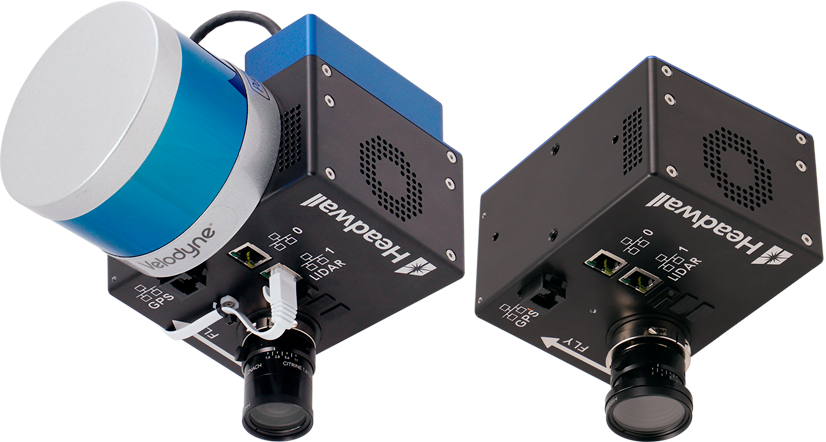
Designed with ideal Size, Weight, and Power consumption (SWaP) for Unmanned Aerial Vehicles (UAVs) and containing aberration-corrected optics, an internal solid-state drive (SSD), Gigabit Ethernet interface, and choice of lenses.
Headwall Nano HP
VNIR Compare
Headwall Nano HP
Wavelength Range = 400 – 1,000 nm
Spectral Bands = 340
Spatial Pixels = 1020
Camera Technology = CMOS
Pixel Pitch = 5.86 ?m
Aperture = f/2.5
Dispersion/Pixel = 1.76 nm
Entrance Slit Width = 20 ?
Spectral FWHM = 6 nm
Frame Rate (Sustained)* = 250 Hz
ADC Bit Depth = 12 bits
Spectrograph Design = Aberration-Corrected
Digital Interface = GigE
GPS/IMU = Internally Mounted High-Performance with PPK4
Data Storage on Payload = 480 GB Solid-State
Weight (without / with LiDAR) = 1.05 kg (2.32 lbs) / 1.73 kg (3.81 lbs)
Base Dimensions (without / with LiDAR) = 132 x 102 x 73 mm (5.2 x 4.0 x 2.9 in) / 132 x 175 x 99 mm (5.2 x 6.9 x 3.9 in)
Power without LiDAR (typical) = 14.4 W
Operational Temp Range = 0 – 40 ?C / 32 – 104 ?F
Storage Temp Range = -20 – 60 ?C / -4 – 140 ?F
*250 Hz with LiDAR enabled

Quick Comparison
| Headwall Nano HP remove | HySpex Mjolnir VS-620 remove | Resonon Pika IR-L remove | HySpex Baldur V-1024 N remove | Resonon Pika IR remove | Specim FX10 remove | |
|---|---|---|---|---|---|---|
| Name | Headwall Nano HP remove | HySpex Mjolnir VS-620 remove | Resonon Pika IR-L remove | HySpex Baldur V-1024 N remove | Resonon Pika IR remove | Specim FX10 remove |
| Image |  |  |  |  |  |  |
| Rating | ||||||
| Content | NEW Nano HP? Designed with ideal Size, Weight, and Power consumption (SWaP) for Unmanned Aerial Vehicles (UAVs) and containing aberration-corrected optics, an internal solid-state drive (SSD), Gigabit Ethernet interface, and choice of lenses. | HySpex Mjolnir VS-620 For applications requiring low mass, combined with high-performance specifications and scientific grade data quality on the full VNIR-SWIR range, HySpex Mjolnir VS-620 is an ideal solution. Sharing the onboard data acquisition unit and navigation system, HySpex Mjolnir VS-620 is both space-efficient and cost-effective. The VNIR and SWIR optical axis are coaligned in the along-track direction, assuring perfect coregistration in the flight direction. In addition to the high-quality hyperspectral data cube, covering the spectral range from 400 - 2500 nm, with 490 bands, double resolution data in the VNIR range is always readily available. With smile and keystone less than 0.1 pixels for each spectral range, the merged Mjolnir VS-620 data product will have coregistration/keystone better than 0.2 pixels for the full VNIR-SWIR range. | Pika IR-L 925 - 1700 nm Lightweight Infrared The Pika IR-L is a lightweight and compact Near-Infrared (925-1,700 nm) imager. The small size and mass make it well suited for airborne applications, where it can provide invisible to the naked-eye contrast of outdoor features. For a compact, lightweight Visible light spectral range option, please see the Pika L. For a higher spectral and spatial resolution version of the Pika IR-L, please see the Pika IR-L+ imager. | HySpex Baldur V-1024 N Baldur V-1024 N covers the full VNIR spectral range from 400-1000nm and is configurable within one octave in the same range. All Baldur cameras are Nyquist cameras giving a spectral resolution of 2 spectral bands while capturing 4 times as much light as the classic systems. To ensure that the most information per framerate is provided, the spectral resolution is kept very close to 2 bands. Additionally, the spatial resolution of Baldur V-1024 N is better than 1.7 pixels, yielding a very sharp camera. | Pika IR 900 - 1700 nm High-Speed Infrared The Pika IR (formerly Pika NIR-320) is a high-speed, cost-effective hyperspectral camera that covers the Near-Infrared (NIR) spectral range. It is our most popular imager for machine vision applications. The Pika IR can be used in our airborne, laboratory, and outdoor hyperspectral systems, as well as standalone or integrated into your system. | Specim FX10 Specim FX10 is a line-scan hyperspectral camera that operates in the visible and near-infrared (VNIR) region. It is an excellent tool for industrial and scientific applications. The Specim FX10 operates in the 400-1000 nm region, and the color-optimized Specim FX10c in the 400-780 nm region. |
| Description | Wavelength Range = 400 - 1,000 nm Spectral Bands = 340 Spatial Pixels = 1020 Camera Technology = CMOS Pixel Pitch = 5.86 ?m Aperture = f/2.5 Dispersion/Pixel = 1.76 nm Entrance Slit Width = 20 ? Spectral FWHM = 6 nm Frame Rate (Sustained)* = 250 Hz ADC Bit Depth = 12 bits Spectrograph Design = Aberration-Corrected Digital Interface = GigE GPS/IMU = Internally Mounted High-Performance with PPK4 Data Storage on Payload = 480 GB Solid-State Weight (without / with LiDAR) = 1.05 kg (2.32 lbs) / 1.73 kg (3.81 lbs) Base Dimensions (without / with LiDAR) = 132 x 102 x 73 mm (5.2 x 4.0 x 2.9 in) / 132 x 175 x 99 mm (5.2 x 6.9 x 3.9 in) Power without LiDAR (typical) = 14.4 W Operational Temp Range = 0 - 40 ?C / 32 - 104 ?F Storage Temp Range = -20 - 60 ?C / -4 - 140 ?F *250 Hz with LiDAR enabled | Spectral Range (nm) = 925 - 1700 Spectral Channels = 236 Spectral Bandwidth (nm) = 3.3 Spectral Resolution - FWHM (nm) = 5.9 Spatial Pixels = 320 Max Frame Rate (fps) = 364 f/# = 1.8 Interface = GigE Dimensions (mm) = 210 x 68 x 63 Weight, w/o lens (kg) = 1.01 | Spectral Range = 400-800/485-960/400-1000 nm Spatial pixels = 1024 Spectral bands = 72/88/106 Max speed* = 1000/800/700 fps Spectral sampling = 5.5 nm Spectral FWHM <2 bands? Spatial FWHM < 1.7 pixels Keystone <15% of a pixel Smile <15% of band FOV = 16? / 40? Bit resolution = 12 Noise floor = 11e Peak SNR >286 Dynamic range = 2560 ROI* = 8 independent ROIs Dimensions (l-w-h) = 316 - 105 - 153 mm Camera Interface = CameraLink * Reducing the number of spectral channels with ROI will proportionally increase the max framerate | Spectral Range (nm) = 900 - 1700 Spectral Channels = 168 Spectral Bandwidth (nm) = 4.8 Spectral Resolution - FWHM (nm) = 8.8 Spatial Pixels = 320 Max Frame Rate (fps) = 508 f/# = 1.8 Interface = GigE Dimensions (mm) = 264 x 115 x 88 Weight, w/o lens (kg) = 2.95 | Spectral Range = 400-1000 / 400-780 (c-version) Spectral resolution (FWHM) = 5.5 nm (mean) Spectral sampling/pixel = 2.7 nm, With default binning Spectral bands = 224 / 140 (c-version), With default binning Numerical aperture = 1.7, With default lens Optics magnification = 0.80 Effective pixel size = 19.9x9.97 ?m, At fore lens image plane Effective slit width = 42 ?m, At fore lens image plane Effective slit length = 10.2 mm, At fore lens image plane SNR @ max. signal = 420 : 1 Spatial samples = 1024 Bit depth = 12 Maximum frame rate = 327 FPS full range / 514 FPS full range (c-version) Binning = 2,4,8 spectral and spatial Default: 2 spectral x 1 spatial ROI = Freely selectable multiple bands of interest. Minimum height of ROI is two 1-binned rows. Maximum frame rate is determined by the total number of rows included in the mMROI?s Pixel operability = 99.993% Image corrections = Non uniformity correction/Bad pixel replacement/Automatic Image Enhancement (AIE)/One point NUC. AIE: Unified spectral calibration + corrected smile and keystone aberrations Sensor material = CMOS Sensor cooling = Passive Full well capacity = 90 ke- Read-out modes = IWR / ITR Optics temperature = Passive Lens mount = Custom mount Fore lens FOV options = 12 deg/ 38 deg (default)/ 47 deg/ 51 deg/ 83 deg. Only the default lens is specifically designed for FX10. With other lens options, optical parameters may vary. Camera digital data output/control interface = GigE Vision, CameraLink Camera control protocols = GenICam, ASCII Power input = 12 V DC (+-10%) Power consumption = Max 4 W Connectors = Industrial Ethernet OR CameraLink 26-pin, 0.5? MDR IP = IP52 Dimensions (L x W x H) = 150 x 85 x 71 mm Mounting surface option on three sides. Mounting kit adds 24 mm distance on mounting side. Weight = 1.3 kg Storage temperature = -20 ... +50?C (non-condensing) Operating temperature = +5 ? +40?C (non-condensing) Relative humidity = 5% - 95% (non-condensing) |


Leave a Reply